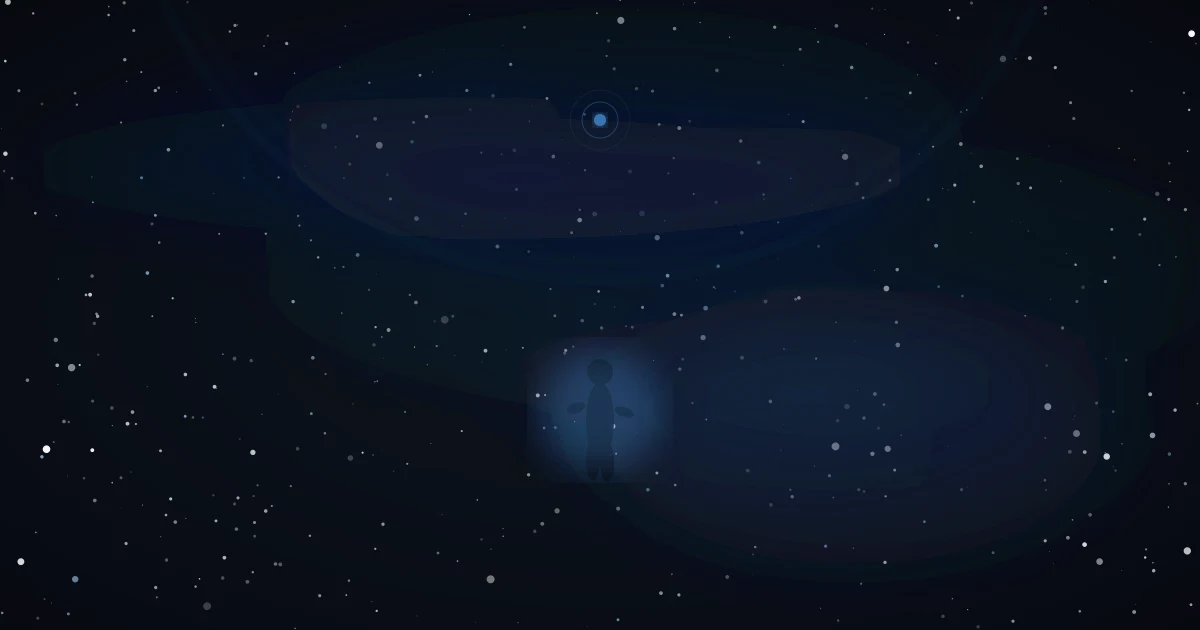
Cheng Xin: The Swordholder Who Couldn't Strike
Of all the characters in Liu Cixin's Remembrance of Earth's Past trilogy, none carry a heavier moral burden than Cheng Xin. She is compassionate, brilliant, and deeply human — and in the calculus of cosmic deterrence, those very qualities make her the most dangerous person alive.
For context on the system she was asked to wield, see Cosmic Deterrence and Luo Ji, the Wallfacer who built it.
Who Is Cheng Xin?
Cheng Xin is introduced in Death's End, the third and final novel of the trilogy. A former aerospace engineer at the Planetary Defense Council, she first appears in the early 21st century, where she sets in motion a plan to send human genetic material to the Trisolaran fleet as a gesture of peaceful intent. She goes into hibernation, wakes into a transformed future, and finds herself at the center of humanity's most fateful decisions.
She is, at her core, a caretaker. She feels things deeply. She struggles to dehumanize or instrumentalize other beings — even alien ones. In a story where survival often demands exactly that kind of cold detachment, her warmth makes her both admirable and, at times, catastrophic.
The Swordholder
Humanity's most sophisticated deterrent system is called Mutual Assured Destruction scaled to the cosmos: a dark forest strike capability. If the Trisolarans attack Earth, a single human operator — the Swordholder — can broadcast the Trisolaran star system's coordinates into the universe, effectively signing their death warrant under the logic of the Dark Forest theory.
The deterrent only works if the Trisolarans believe the Swordholder will actually use it.
When the previous Swordholder, Luo Ji, steps down, humanity elects a replacement. They choose Cheng Xin.
It is not a random choice. Cheng Xin is beloved. She is gentle. And that is precisely the problem. The Trisolarans — and many humans who understand the logic of deterrence — recognize immediately that Cheng Xin will not press the button. She cannot. It would mean the extinction of an entire civilization, billions of minds, to preserve one.
Within moments of her taking the Sword, the Trisolarans invade.
The Failure That Defines Her
Cheng Xin's inability to act is not cowardice. That distinction matters. She stands in front of the controls, hand trembling, and cannot bring herself to commit mass annihilation — not even to save humanity. It is a deeply, recognizably human response.
But the story doesn't let her off easily. The invasion that follows is devastating. Bunker worlds are established. Earth is eventually destroyed. The causal chain runs directly through that moment of paralysis.
Liu Cixin presents this without simple judgment. He doesn't frame Cheng Xin as a villain. Instead, he forces a harder question: Is the capacity for mercy, taken to its logical extreme, a form of self-destruction?
The universe of Three-Body Problem is pitiless. Civilizations that survive are not necessarily the most virtuous — they are the most ruthless when ruthlessness is required. Cheng Xin represents a humanity that refuses to become that, and the story shows exactly what that refusal costs.
The Gravity of a Second Chance
Cheng Xin is not finished after the Sword fails. The narrative follows her through centuries — via hibernation and relativistic time dilation (as explored in the Human Civilization Timeline) — as she witnesses the slow collapse of human civilization and the universe itself. She remains a central figure through multiple catastrophes, always trying to preserve, to protect, to find another way.
She even acquires her own star system, a gift from Luo Ji, and at the very end of the universe she and her companion Aa leave behind a small preserved bottle of matter — a message to the next universe, a final act of care for something that will never know she existed.
What She Means
Cheng Xin is a test case for a philosophical argument the trilogy makes again and again: survival in the cosmos may be fundamentally incompatible with the moral sensibilities humans most value. Love, mercy, the refusal to treat other beings as expendable — these are not weaknesses in ordinary life. But in a dark forest universe, they may be fatal.
She is also Liu Cixin's most direct engagement with gender politics, whether intentional or not. Critics have noted that Cheng Xin embodies traditionally "feminine" qualities — nurturing, empathetic, relationship-focused — and that the narrative punishes humanity for choosing someone like her to hold the Sword. It's a reading the author has pushed back on, but it remains a live debate among readers.
What's harder to dispute is that Cheng Xin is the emotional anchor of Death's End. Her choices, her grief, her persistence across eons give the novel its heart. Without her, the book would be a cold philosophical exercise. With her, it is something more painful: a story about what it might mean to be good in a universe that does not reward goodness.
Key Moments
- Sending the genes: Her earliest act — a gift to the Trisolarans that plants seeds of hope and conflict alike.
- Receiving the Sword: The moment humanity's fate rests on whether she can do the unthinkable.
- The invasion: A civilization undone in hours because one person could not pull a trigger.
- The lightspeed ship decision: Another agonizing choice about who survives and who is left behind.
- The bottle at the end of time: A final quiet act of preservation that speaks to everything she is.
Cheng Xin doesn't save humanity. But she never stops trying. And in Liu Cixin's universe, that might be the most honest thing anyone can do.