Ye Wenjie: The Woman Who Invited the Apocalypse
There is a moment, late in The Three-Body Problem, when Ye Wenjie explains herself — when she describes the calculation she made on a mountaintop in the 1960s and pressed a button that she knew might end the world. Liu Cixin does not let the reader condemn her easily. He doesn't let the reader forgive her easily either. What he gives us instead is something rarer: a portrait of a human being whose most catastrophic act is also her most comprehensible one.
Ye Wenjie is arguably the most important character in the entire Remembrance of Earth's Past trilogy. She appears in fewer pages than Luo Ji or Cheng Xin. She dies before the story reaches its cosmic crescendo. But the whole architecture of civilizational doom rests on what she chose to do, alone, decades before Wang Miao ever saw a countdown burning in his photographs.
The Breaking Point
Her story begins where Liu Cixin begins the novel: the Cultural Revolution. Ye Wenjie is a young astrophysics graduate student when the Red Guards drag her father — a distinguished physicist and her intellectual hero — into a public struggle session. She watches a mob beat Ye Zhetai to death for refusing to recant his scientific beliefs. Then, as he dies, she watches two of his former students help deliver the blows.
This is the wound that never closes. Ye Wenjie doesn't lose faith in physics or in science — she loses faith in human beings. She concludes that the cruelty she witnessed is not aberrant but structural: something baked into humanity, something that would reassert itself regardless of political system or historical moment. The Cultural Revolution is its most vivid expression, but it is not its cause.
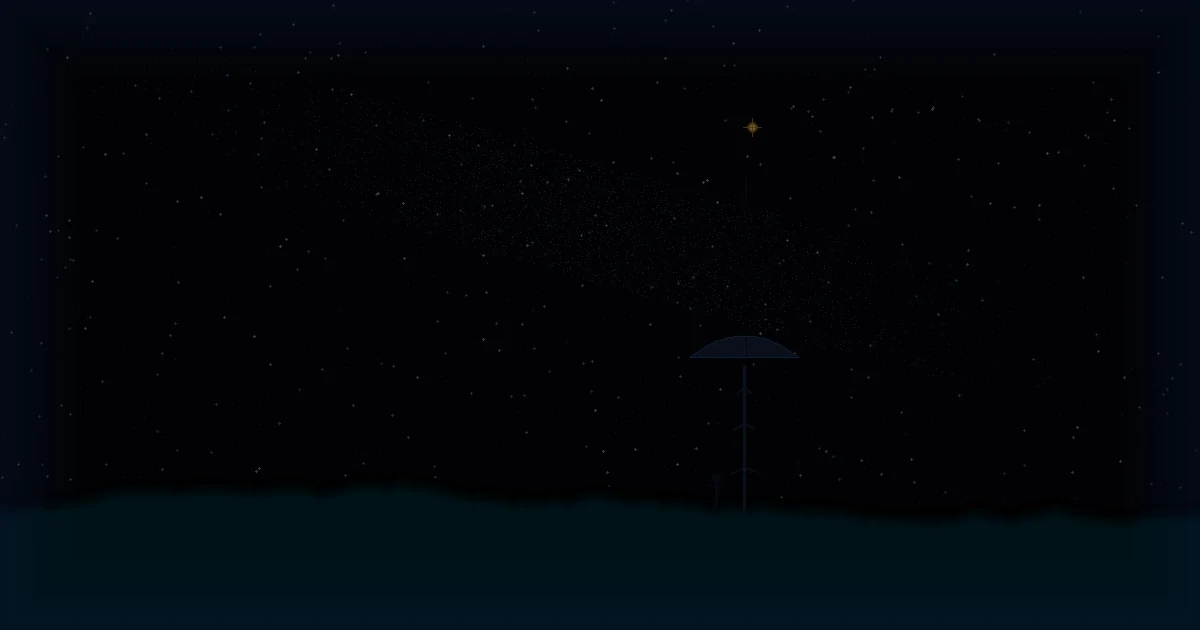
She is sent to labor camp, then recruited for Red Coast Base — a secret military installation buried on the slopes of Greater Khingan Mountain, quietly pointed at the stars. The stated mission is to search for extraterrestrial intelligence. The cover story is weather research. Ye Wenjie spends years there, isolated, surveilled, her professional abilities used and her personhood ignored. She has plenty of time to think.
The Logic of Despair
What Ye Wenjie develops over those years is not a plan — at least not at first. It is a philosophical conclusion. She reads a smuggled copy of Rachel Carson's Silent Spring and finds in it a diagnosis of her despair: humanity is a civilization that destroys what it touches, and has always been. She stops believing that her species is capable of correcting itself from within.
When Red Coast Base receives an alien signal from the Alpha Centauri system, she is assigned to analyze it. When the facility's director discovers that she has identified its origin and begins to panic about what to do next, she is left briefly alone with the transmitter. She could report what she found. She could wait for her superiors to decide.
She replies instead.
Her message tells the Trisolarans, essentially: we are here, come, and if you are more advanced than us, perhaps you can save this planet from its people. She knows this might be suicidal. She does it anyway — because her calculation is that nothing humanity could do to itself would be worse than what it was already doing, and that outside intervention, however violent, might at minimum apply a different logic to the problem.
This is what makes Ye Wenjie so difficult. She is not acting from nihilism. She is acting from a form of exhausted hope: hope that something beyond humanity might succeed where humanity has demonstrably failed.
A Lifetime of Consequences
The Trisolarans eventually respond — and a second message, from a lone dissident within their fleet, warns her not to reply again. She replies again anyway. She knows the risk. She accepts it on behalf of the entire species, without their knowledge or consent.
From there, her role shifts. She becomes one of the founders of the Earth-Trisolaris Organization — the group that believes Trisolaran civilization represents a necessary reckoning for humanity. She eventually tells her daughter, Yang Dong, the truth about what she did. Her daughter, unable to bear the weight of knowing that physics itself was being sabotaged by the sophons her mother helped invite, takes her own life. It is perhaps the trilogy's most intimate measure of what Ye Wenjie's decision actually cost at the human scale: not just billions of future lives in the abstract, but one specific young woman whose mind she broke with the truth.
By the time Wang Miao meets her, Ye Wenjie is old, widowed, and living in quiet isolation near Red Coast's ruins. She is not consumed by guilt, exactly. She is, in some sense, at peace with what she did — because she has not changed her assessment of humanity. She still believes she was right about what the species was, even if she no longer believes she was right about what to do with that belief.
The Moral Weight
Liu Cixin handles Ye Wenjie's arc with unusual care. He gives us no easy verdict. Her act was a crime of staggering proportions — an individual deciding, without consent, that her species deserved to be threatened or destroyed. But the novel also makes her reasons fully legible. The violence she saw at the beginning of the book is not minimized. The Cultural Revolution sequences are among the most searing pages Liu Cixin ever wrote, and they function as the moral ground for everything that follows.
The novel essentially asks: if a person saw what Ye Wenjie saw, suffered what she suffered, and concluded what she concluded — can we call her wrong? Can we call her wrong and still understand her?
The answer Liu Cixin arrives at is not exactly forgiveness and not exactly condemnation. It is something more honest than either: comprehension. He makes Ye Wenjie comprehensible, which is more disturbing than making her monstrous would have been.
Legacy Across the Trilogy
Ye Wenjie's influence extends far beyond her own lifespan. The ETO she helped found shapes the political landscape of the entire Crisis Era. The signal she transmitted is the original cause of every disaster the trilogy documents — the Doomsday Battle, the Great Ravine, the eventual destruction of the solar system. Her pivotal role in nudging Luo Ji toward the Dark Forest theory is itself one of the trilogy's great ironies — the woman who triggered the crisis also quietly handed humanity its one viable defense against it. In a story spanning thousands of years and billions of deaths, it all traces back to one woman alone in a radio facility on a cold mountain, making a choice that no one had asked her to make and no one could undo.
She is, in the most literal sense, the woman who invited the apocalypse. But Liu Cixin insists that we understand why she opened the door — and that understanding is the thing that makes her, after all these pages and centuries, impossible to forget.