For most of the Three-Body trilogy, humanity moves slowly. Its warships cross the solar system on nuclear fusion drives, their crews measured in months and years of transit time. Near-lightspeed travel is a thing that happens to the Trisolarans — something arriving at humanity from the outside, a reminder of how far behind the species still is. Then curvature propulsion arrives, and everything changes. For the technical underpinnings, see also Curvature Propulsion: Lightspeed Drive.
What Curvature Propulsion Actually Does
Conventional rocket propulsion works by Newton's third law: throw mass backward, move forward. The problem is the rocket equation. The more propellant you carry, the more propellant you need to carry that propellant, and the efficiency curve turns vicious quickly. Chemical rockets, nuclear thermal drives, even fusion pulse systems all share this fundamental constraint: they push against something, and the pushback is the cost.
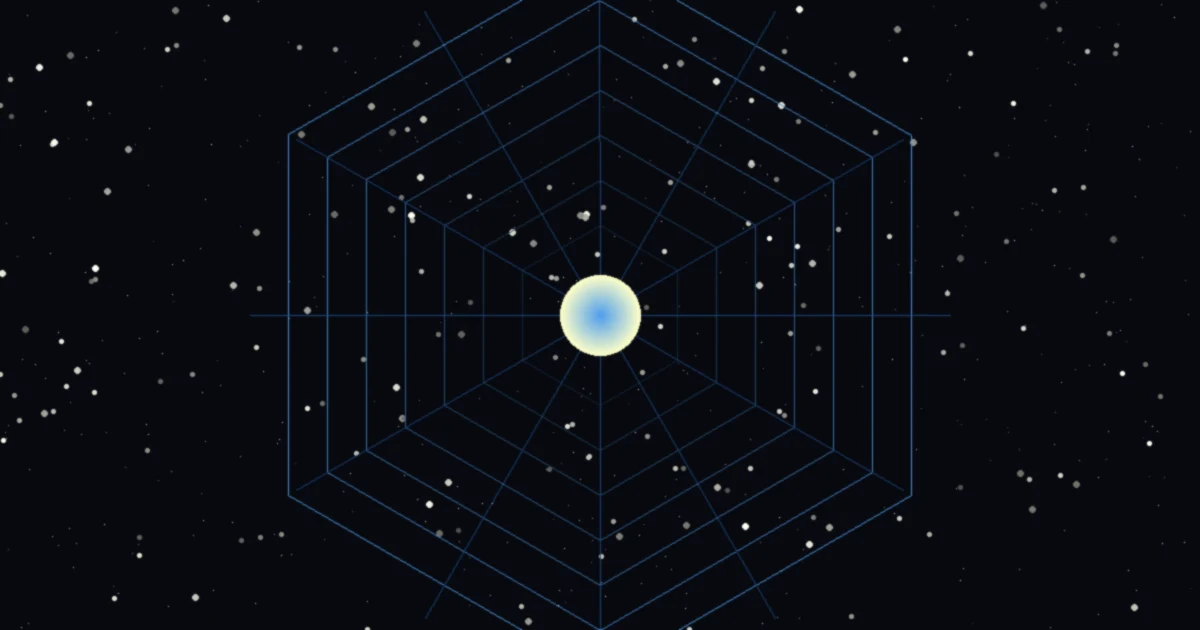
Curvature propulsion takes a different approach. Rather than pushing against matter, it distorts spacetime itself around the vessel — creating a local geometry where the destination is, in some sense, closer than it appears, and the ship rides the curvature rather than fighting through space. In real-world physics, this concept has a formal ancestor: the Alcubierre drive, proposed by physicist Miguel Alcubierre in 1994. Alcubierre showed mathematically that if you could contract spacetime ahead of a ship and expand it behind, the vessel could achieve apparent faster-than-light transit without any local violation of relativity — the ship sits still in its own bubble while spacetime moves around it.
Liu Cixin's curvature drive draws clearly on this lineage, though it arrives via Trisolaran technology transfer rather than human engineering. By the time it reaches humanity, it enables near-lightspeed velocities that reduce interstellar transits from centuries to years. In strategic terms, this is as transformative as the difference between a sailing ship and a jet aircraft.
The Strategic Transformation
Before curvature propulsion, human military doctrine was defined by the solar system. Ships could cross from Earth to Jupiter in months; getting anywhere meaningful beyond Neptune was measured in generations. The Crisis Era fleet, for all its scale, was a force designed to fight in a fishbowl.
Curvature drives shattered this constraint overnight. Ships that could reach near-lightspeed could now, in principle, intercept Trisolaran vessels — or escape them. More significantly, they could scatter. A civilization with curvature propulsion was no longer confined to a single, targetable address. The Escapist movement that emerged during the Deterrence Era was premised entirely on this possibility: if a thousand ships could scatter to near-lightspeed across a thousand vectors, no single Dark Forest strike could end them all.
The technology also restructured the balance of power among the human nations operating within the PDC. Whoever controlled curvature drive production controlled the terms of any future conflict. The covert development programs — including Thomas Wade's unauthorized acceleration effort — were not mere technical competitions. They were fights over who would define the next phase of human civilization.
The Vulnerability No One Wanted to Acknowledge
Here is the brutal irony at the core of the curvature propulsion story: the drive signature is visible.
A ship operating a curvature drive distorts spacetime in a detectable way. To any civilization monitoring the galactic electromagnetic and gravitational spectrum — and the Dark Forest hunters, by definition, are doing exactly this — a curvature drive emission is not merely a signal. It is a locational fix. Not just on the ship, but on the ship's home system.
This is not a flaw in the technology. It is a structural feature of physics itself. Any propulsion system energetic enough to bend spacetime locally will produce an anomaly in the fabric of the universe that propagates outward at the speed of light. You cannot muffle it. You cannot aim it only at friendly receivers. Every activation of a curvature drive is a broadcast.
The solar system had maintained a degree of ambiguity before widespread curvature drive use. Its location was known — Ye Wenjie had seen to that — but the timeline of the threat it represented was uncertain to hunters operating at galactic distances. The moment human ships began emitting curvature signatures in significant numbers, that ambiguity collapsed. The solar system announced itself, clearly and repeatedly, as a civilization that had crossed a technological threshold worth noticing.
It is no coincidence that the Singer's strike followed the expansion of curvature propulsion use. The drive that enabled humanity's fastest potential escape was, simultaneously, the signal that made escape necessary in the first place. For how this played out in the broader cosmology, see Dark Forest Theory.
The Alcubierre Problem, Made Narrative
Real physicists who study the Alcubierre drive have catalogued its difficulties: it requires exotic matter with negative energy density, which has never been observed in quantity; it may produce Hawking radiation that destroys the ship from inside the bubble; the bubble itself cannot be steered once activated from the outside. Most physicists consider it a mathematical curiosity rather than a practical proposal.
Liu Cixin sidesteps these objections by treating curvature propulsion as a solved Trisolaran technology — the engineering problems are inherited already solved, not developed from scratch. This is a reasonable narrative choice. It frees the trilogy to explore the consequences of the technology rather than its development, which is where the interesting questions actually live.
Those consequences have nothing to do with exotic matter. They have everything to do with visibility.
The deeper insight the trilogy offers is that the question of whether a technology is safe to use cannot be separated from the question of who is watching. Conventional drives, however powerful, produce exhaust and radiation in forms that dissipate quickly and reveal nothing specific about propulsion principle. Curvature drives announce their operating principle in their wake — and in a universe where operating principle directly communicates technological level, that announcement is the most dangerous thing a civilization can do.
The Technology That Arrived Too Late and Too Early
There is a structural tragedy to curvature propulsion's appearance in the trilogy. It arrives too late to save humanity's conventional military posture: the Doomsday Battle has already happened, the fleet is debris, and deterrence has replaced warfighting as the strategic framework. The drive's military applications — interception, maneuver, force projection — come after they would have mattered.
But it arrives too early in another sense: before humanity has developed the concealment technologies or strategic doctrines to use it safely. The Escapist fleet scatters with curvature drives, leaving drive signatures across a dozen vectors. Thomas Wade's program tries to accelerate development faster than the surveillance architecture can respond. Every use of the technology is also an exposure.
In the Dark Forest, the most dangerous technology is always the one that makes you more capable and more visible at the same time. Curvature propulsion is the trilogy's purest example of this principle. It broke the speed limit that had kept humanity confined to one system — and in breaking it, it painted a target on everything it was supposed to save.
What It Means for the Dark Forest
The curvature drive episode illustrates one of the trilogy's most consistent arguments: that technological advancement and survival are not the same thing, and may be directly opposed.
Every civilization that develops curvature propulsion — or its equivalent — crosses a visibility threshold that dramatically increases its detection probability. In the Dark Forest cosmology, this threshold is not a technical detail. It is the moment a civilization announces to every hunter in the galaxy that it has become interesting enough to eliminate before it becomes dangerous enough to threaten them.
The silence of the universe, in this reading, is not the silence of civilizations that failed to develop advanced propulsion. It is the silence of civilizations that succeeded, and were noticed for it.
Humanity's curvature drives ran, ships scattered, the Singer looked up — and the solar system had already said everything it needed to say.