When Death Is a Scheduled Appointment
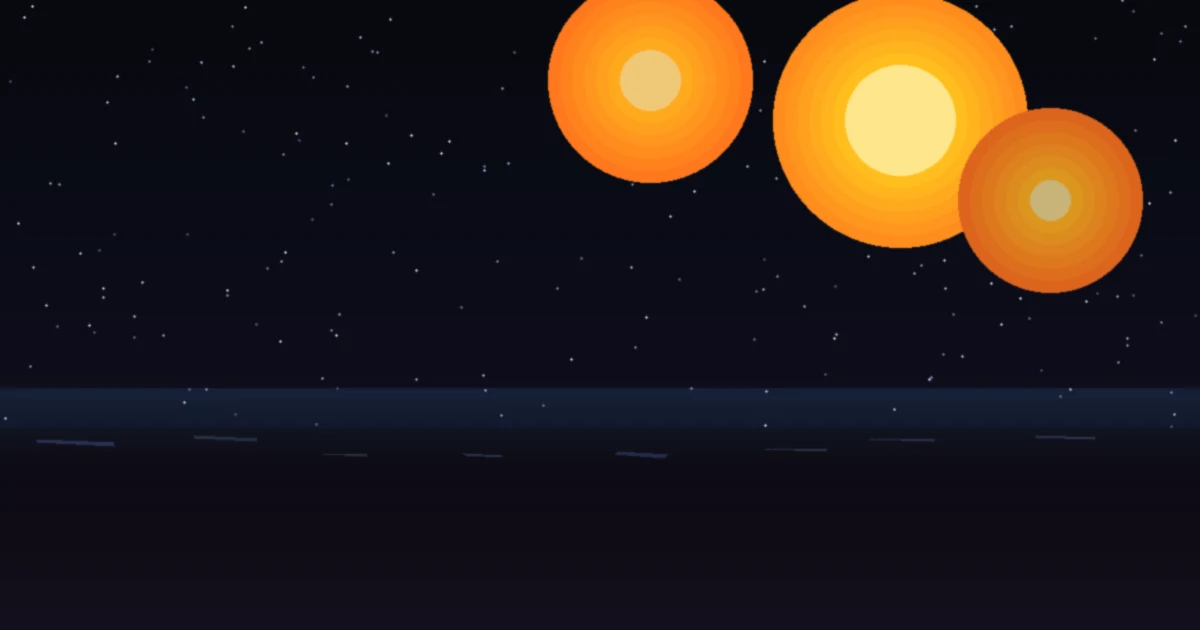
Every Trisolaran knows the signs. The sky brightens unpredictably. Two suns appear where there should be one, or none at all — a consequence of the three-body gravitational chaos that defined their world. Temperatures soar or plunge toward extremes that no living cell can survive. And so a civilization that might otherwise resemble our own does something no human civilization has ever had to do: it folds itself away.
Trisolaran dehydration is one of the most vivid biological inventions in Liu Cixin's The Three-Body Problem. When a Chaotic Era makes the environment lethally hostile, Trisolarans voluntarily reduce their bodies to thin, desiccated sheets — drained of water, metabolically inert, capable of surviving heat, cold, and atmospheric chaos that would kill any normally hydrated organism. When stable conditions return, they are rehydrated and resume their lives. Death-like dormancy, practiced not as tragedy but as routine.
It is a strange and haunting concept. But it may not be as alien as it first appears.
What Dehydration Actually Does to a Body
Water makes up roughly 60 percent of the human body by mass, and it is not merely a filler. Water is the medium in which essentially every biochemical reaction takes place — enzymes fold and function in it, ions diffuse through it, cell membranes maintain their structure with it. Remove the water, and metabolism halts. The cell machinery stops. From the outside, the organism appears dead.
This is the principle behind cryptobiosis: a state of metabolic suspension induced by extreme environmental stress, including desiccation. Real organisms enter it. The question is which ones, and how.
Tardigrades: The Closest Thing to Trisolarans
The animal most often cited in discussions of biological desiccation tolerance is the tardigrade — a microscopic invertebrate roughly half a millimeter long, found in environments ranging from Antarctic ice to deep-sea sediment to the backs of mosses on city rooftops.
Tardigrades facing desiccation enter a state called anhydrobiosis. They retract their legs, expel most of their body water, and produce a sugar called trehalose that forms a glassy matrix protecting cellular structures from damage. In this tun state, they are nearly impervious to conditions that would quickly kill most other animals: temperatures from near absolute zero to over 150°C, radiation doses lethal to mammals, and the vacuum of space itself. Tardigrades in tun form have been exposed to open space aboard research satellites and survived rehydration.
The Trisolaran dehydration Liu Cixin describes is clearly operating on a similar principle. The body's water is expelled, metabolism ceases, and a structure that is biologically equivalent to a dried sheet can withstand temperature extremes incompatible with normal physiology. When conditions stabilize and water returns, the organism is reconstituted.
The difference in scale is enormous — tardigrades are microscopic, Trisolarans are intelligent beings with civilization — but the underlying mechanism is consistent with genuine biology.
Bdelloid Rotifers and Brine Shrimp
Tardigrades are not the only model. Bdelloid rotifers, microscopic freshwater animals, have survived complete desiccation for decades in laboratory conditions and revived when rehydrated. They have also demonstrated the remarkable ability to repair DNA damage accumulated during dormancy, which suggests that the cellular machinery for recovery is as important as the mechanism for entering the dormant state.
Brine shrimp (Artemia salina) produce eggs — known commercially as "sea monkeys" — that can survive complete desiccation for years and hatch when submerged in salt water. The eggs, like tardigrade tuns, contain trehalose, and the embryo within is maintained in a state of metabolic arrest until conditions permit development.
Liu Cixin appears to have extrapolated these real mechanisms to their logical extreme: a multicellular, intelligent organism that retains the cellular machinery for cryptobiosis as an evolutionary adaptation to a chaotic stellar environment. Where Earth organisms enter cryptobiosis as a stress response, Trisolarans have integrated it into their civilizational planning.
The Evolutionary Logic
The obvious question is how such an adaptation could evolve. Natural selection acts on individual survival, not civilizational strategy — so what selective pressure would produce intelligent beings capable of voluntary, organized desiccation?
The answer lies in Trisolaris's history. The planet orbits a three-star system in configurations that are, by definition, chaotic. Stable eras are real but unpredictable; Chaotic Eras can arrive without warning and persist for generations. An organism that could survive the interval between stable eras would have an enormous reproductive advantage over one that could not.
Over millions of years, organisms capable of surviving even brief periods of desiccation would persist through Chaotic Eras. Those capable of surviving longer periods would persist through worse ones. The survivors of each catastrophic cycle would be those whose cellular chemistry was most robust in the dry state — and eventually, the survivors would be those who could not only survive desiccation but organize it, time it, and plan for rehydration.
The result is a species whose relationship to death is categorically different from our own. Humans die when they stop. Trisolarans stop when they need to, and resume when they can.
What the Trilogy Shows Us
In the Three-Body game sequences, players witness the practical machinery of Trisolaran dehydration. When a Chaotic Era approaches, the population does not panic or flee. The announcement goes out, and Trisolarans methodically dehydrate — organized, coordinated, storing themselves until conditions improve. Leadership hibernates. Knowledge is preserved. The physical records of the civilization are maintained, waiting for whoever survives to rehydrate and continue.
The efficiency of this process is both remarkable and disturbing. Liu Cixin shows us a civilization in which the logistical infrastructure for dying and returning exists alongside libraries, governments, and militaries. Dehydration centers, presumably, have addresses. There are protocols for who monitors the conditions, for when rehydration should begin, for what to do when only some of the population successfully revives.
Culture Built on Discontinuity
The most profound implication of Trisolaran dehydration is cultural rather than biological. Human civilization assumes continuity. Our institutions, our relationships, our sense of personal identity — all depend on the assumption that we will be here tomorrow, and that tomorrow will follow from today in an unbroken sequence.
Trisolaran civilization cannot make this assumption. Every stable period is borrowed time. Every personal relationship, every institution, every project undertaken could be interrupted mid-sentence by a Chaotic Era that lasts centuries. The civilization that emerges from this constraint is one that has internalized impermanence at the deepest level.
Trisolaran fatalism, their famous pragmatism, their willingness to sacrifice individuals for the survival of the collective — these are not abstract philosophical positions. They are practical adaptations to a world in which death is temporary but interruption is permanent, in which the self that rehydrates may be centuries removed from the world it remembers, and in which civilization itself is an ongoing project of reconstruction rather than an inherited continuity.
The Dark Forest theory is often discussed as a product of Trisolaran aggression. But it may be equally a product of Trisolaran biology: a species that has survived two hundred near-extinctions by folding itself away understands, in its bones, that survival is always conditional and that anything which threatens survival must be treated with absolute seriousness.
The Question of Identity
There is one question Liu Cixin leaves open that real biology makes urgent: what is preserved in the dried state, and what is lost?
For tardigrades, the answer appears to be: almost everything. The cellular structures are maintained, metabolism resumes, the organism continues. But tardigrades do not have memories encoded in synaptic patterns, or relationships built over decades, or identities constituted by continuous experience.
A Trisolaran who dehydrates for a century and rehydrates may have preserved their neurons and their stored memories. But what continuity of self exists across a gap that long? The person who falls dormant and the person who wakes are connected by biology, but are they the same individual in any meaningful sense?
The trilogy does not answer this. But it is perhaps the deepest question that Trisolaran biology raises — and one that may explain something about why a civilization that treats death as a scheduling problem nonetheless produces individuals capable of something that looks, occasionally, like grief.
The Three-Body Problem is available in English translation by Ken Liu (Tor Books). The Three-Body game sequences are in Part I and II of the first novel.