The Sophons: How Trisolarans Built a Supercomputer Out of a Proton
Of all the weapons the Trisolarans deploy against humanity, none is more elegant or more devastating than the sophon. It doesn't fire projectiles or emit radiation. It doesn't kill anyone directly. What it does is subtler and, in many ways, far worse: it makes it impossible for humans to understand the universe well enough to defend themselves — the core problem the Wallfacer Program was designed to work around.
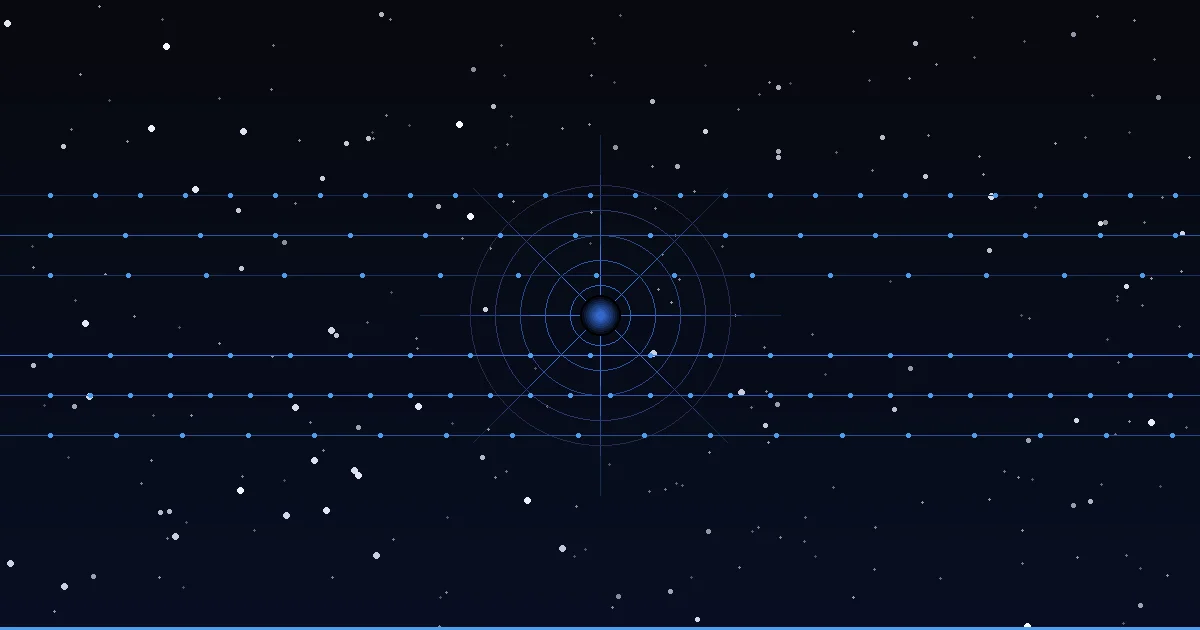
A sophon is a proton — a single subatomic particle — that has been transformed into a fully functional supercomputer and launched across the light-years separating Alpha Centauri from Earth. Understanding how Liu Cixin imagines this working requires a brief detour into the geometry of physics at the smallest possible scales.
The Hidden Dimensions Inside a Proton
In string theory and related frameworks, the universe we inhabit — three spatial dimensions plus time — is not the whole story. There may be additional spatial dimensions, curled up so tightly at subatomic scales that they're invisible to any instrument humanity has yet built. These compactified dimensions are thought to be on the order of the Planck length, roughly 10⁻³⁵ meters, billions of times smaller than a proton itself.
Liu Cixin's key imaginative leap is this: what if a sufficiently advanced civilization could unfold those hidden dimensions? A proton, in this framework, is not merely a tiny ball of quarks and gluons. It is a structure with geometry — and that geometry, expanded, could become something enormous.
In The Three-Body Problem, Trisolaran scientists do exactly this. Using technology far beyond anything humans have conceived, they cause a single proton to unfold its extra dimensions, expanding the particle into a surface vast enough to be visible — first as a sphere the size of a solar system, then progressively refolded to smaller scales where its surface can be etched with circuits.
The Engineering of a Proton Chip
The actual manufacturing process, as Liu Cixin describes it, involves unfolding the proton through a sequence of dimensional configurations. At its largest expansion, the proton's two-dimensional surface might span millions of kilometers — a gossamer sheet of pure geometry floating in space. At this scale, Trisolaran engineers can inscribe it with circuit patterns using beams of energy.
This is, in essence, photolithography at a cosmic scale. The same basic process used to etch transistors onto silicon wafers is applied to the surface of an expanded proton — except the "wafer" is a subatomic particle stretched to the size of a planetary orbit, and the resulting device will eventually be compressed back down to a size smaller than an atom.
Once the circuits are inscribed, the proton is refolded back through its dimensional states — from two-dimensional surface down through successively more compact geometries until it occupies its original subatomic volume. The circuitry, etched into the structure of space itself, survives the refolding. What remains is a proton that is also, somehow, a computer. Liu Cixin calls the finished product a sophon — a contraction of "sophont" (thinking being) and "proton."
What Sophons Can Do
The capabilities that follow from this construction are remarkable. Because a sophon is still, physically, a proton, it can move at the speed of light — or arbitrarily close to it. It can pass through virtually any material unimpeded. It is, for all practical purposes, undetectable by human instruments and indestructible by any weapon available to us.
Two sophons are sent to Earth in entangled pairs, allowing instantaneous communication between them across any distance. This gives the Trisolarans a surveillance network on Earth with zero latency — anything a sophon observes is known in Trisolaris effectively in real time, bypassing the four-light-year communication delay that would otherwise constrain their intelligence operations.
Sophons are small enough to be anywhere and everywhere. They observe meetings, read documents, monitor conversations. They are the perfect spy: present in every room simultaneously, impossible to sweep for, impossible to exclude.
The Science Blockade
The sophons' most strategically significant capability isn't surveillance — it's sabotage. High-energy particle accelerators, like CERN's Large Hadron Collider, work by smashing particles together at enormous velocities and observing what emerges. The results of these collisions are how physicists probe the structure of matter at the deepest levels.
Sophons, moving at near-light speed and passing through any material, can fly through particle accelerator rings and physically interfere with collisions. They introduce random noise into experimental results. They make the data meaningless.
The effect on human physics is catastrophic. Fundamental research grinds to a halt. Scientists cannot distinguish real signals from sophon-induced artifacts. The particle physics that would need to advance to eventually give humanity the technologies to compete with Trisolaran civilization — propulsion, energy, materials — is effectively frozen in place.
This is the science blockade, and it's the sophons' most important mission. It shaped the entire Crisis Era — a civilization building weapons for a war four centuries away, unable to advance the physics that might actually close the gap. Not to spy on human governments, though they do that too. The real goal is to ensure that humanity arrives at the moment of the Trisolaran fleet's arrival four centuries hence with the same basic understanding of physics it had at the moment the blockade began. A civilization unable to advance its fundamental science cannot develop the technologies that might let it survive.
The Sophon as a Character
In later volumes of the trilogy, the sophons take on an additional role that neither Liu Cixin's characters nor the reader initially anticipated: they become a face. During the Deterrence Era, the Trisolarans configure a sophon to project a physical avatar — a humanoid figure, always female in depiction, who serves as the primary diplomatic interface between the two civilizations. This figure is explored in detail in Humanoid Sophon Avatar.
This is a remarkable reversal. The sophon began as an invisible weapon, the ultimate expression of Trisolaran superiority. It becomes, eventually, something more like an ambassador — or a theatrical performance. Whether the sophon's humanoid avatar represents genuine willingness to communicate or merely a new form of psychological manipulation is a question the trilogy deliberately leaves unresolved.
The Limits of Omniscience
There is one thing sophons cannot do, and the entire Wallfacer Program is built around it: they cannot read minds. Sophons observe behavior and record words. They cannot access the interior of a human consciousness. Liu Cixin treats this as the crucial asymmetry that gives humanity any hope at all — the Trisolarans can know everything a person does and says, but not what they're actually thinking.
It's a limitation that feels almost quaint given everything else sophons can do. And yet it becomes the foundation of the series' most audacious strategic conceit.
A Weapon Made of Physics
What makes the sophon concept so striking isn't just its creativity — it's how rigorously Liu Cixin grounds it in real theoretical frameworks. String theory, compactified dimensions, and quantum entanglement are genuine areas of active physics research. He doesn't invent impossible principles; he extrapolates from ideas physicists actually hold, accelerating them by several thousand years.
The sophon is a thought experiment about what becomes possible once you control the geometry of spacetime itself. It's also one of science fiction's most effective articulations of a particular kind of despair: not the despair of being outgunned, but of being out-thought — of facing an enemy that has weaponized your own ignorance against you, and done so before you even knew the war had started.
By the time Wang Miao begins to understand what sophons are, they've already been on Earth for years. The civilization that built them is explained through Trisolaran Physiology and Culture and the Dark Forest Theory that governs their strategy. The blockade is already in effect. The centuries of catching up that humanity would need have already been foreclosed.
That's the sophon's true sophistication: it doesn't defeat humanity in the future. It defeated humanity in the past.