The End of Home
When the two-dimensional foil swept through the solar system, it didn't just destroy planets. It ended the concept of home for the human species.
The event was swift in cosmic terms and catastrophic beyond any prior reckoning. Earth, the sun, and everything in between flattened into a thin geometric plane expanding at near-lightspeed. The scattered remnants of humanity — those aboard the Escapist fleet, deep-space habitats, and curvature-drive ships far enough from the solar system — suddenly found themselves in a new category of existence: the first truly homeless civilization in history.
What followed was called the Roaming Era, and it would define the human species for thousands of years. It eventually gave way to the Galaxy Era, when scattered human communities began settling new worlds across the cosmos. The full arc of how humanity reached this point is documented in the Human Civilization Timeline.
A Civilization Without Coordinates
The most disorienting feature of the Roaming Era wasn't material scarcity, though that was severe. It was the absence of a fixed reference point.
For all of recorded history, human civilization had organized itself around places. Cities, nations, continents — even in the era of space stations and lunar settlements, Earth remained the gravitational center of human identity. Ships returned to it. Institutions traced their authority back to it. The entire psychological architecture of what it meant to be human was built on the premise of a home world.
That premise vanished in an afternoon.
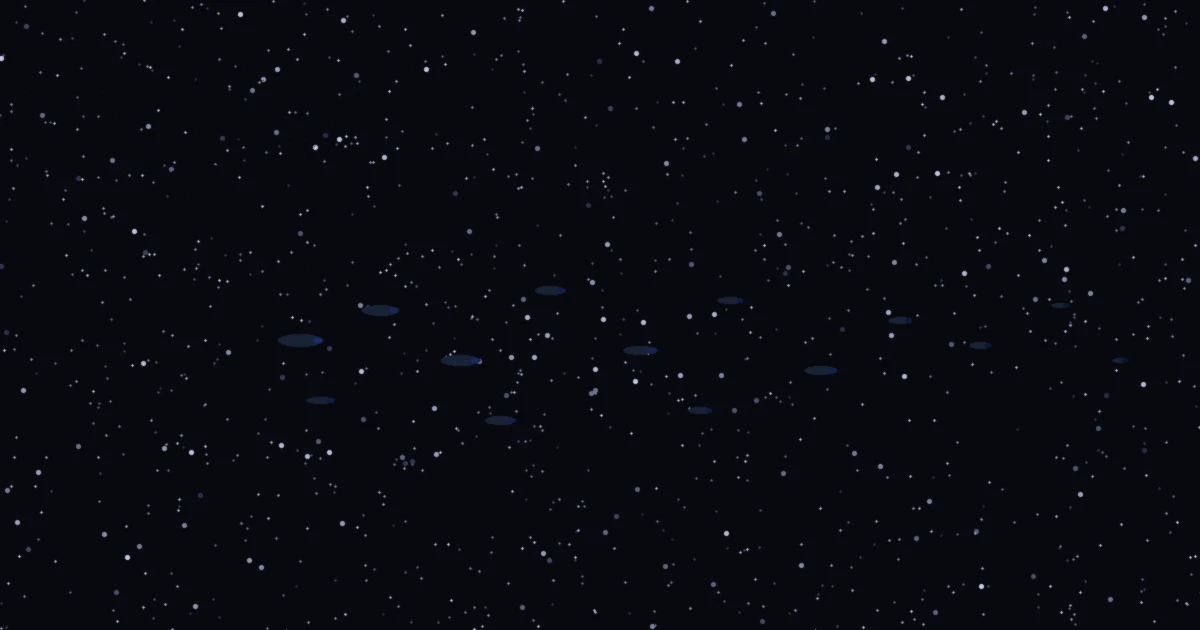
Roaming Era humanity lived aboard generation ships: enclosed, self-sustaining vessels carrying populations measured in thousands or tens of thousands. These ships weren't traveling to any particular destination, at least not initially. They were simply moving — away from the expanding two-dimensional plane that had consumed the solar system, into the interstellar void, following the logic that any direction was better than the one behind them.
Social Structures Aboard Generation Ships
Inside the generation ships, civilization had to be reinvented from first principles.
The most immediate problem was authority. The political institutions of the Crisis Era — the Planetary Defense Council, national governments, even the military command structure — had been designed for a world where power flowed outward from Earth. Without Earth, those institutions lost their legitimacy almost immediately. What replaced them varied from ship to ship.
On some vessels, military hierarchy became the de facto government, with ship captains exercising authority that previous generations would have recognized as executive, judicial, and legislative power combined. On others, democratic assemblies formed and reformed around competing visions of where the ship should go and what it should become. A few developed quasi-religious structures, organizing community life around rituals that gave meaning to an existence of perpetual transit.
What these arrangements shared was smallness of scale. Without planetary resources, without the infrastructure of a fixed civilization, human social organization contracted. The community that mattered was the ship. Neighbors were measured in corridors rather than neighborhoods. Every resource decision was immediate and visible, which created a kind of enforced transparency that reshaped social norms.
Maintaining Identity Without a Shared World
The deeper challenge of the Roaming Era was cultural continuity. How does a species remain one species when its members are scattered across light-years, traveling at different velocities, aging at different rates due to relativistic effects?
The problem was more acute than it might appear. A ship traveling at a significant fraction of lightspeed experiences time differently than one cruising at low velocity. Over generations, two ships that departed together could find themselves centuries out of sync with each other's personal timelines. The humans who eventually met — if they met at all — would share a genetic heritage but inhabit almost incomparable histories.
Language drifted. Cultural references diverged. The memory of Earth, so vivid for the generation that had survived the foil, became increasingly abstract for their children and mythological for their grandchildren. The Roaming Era produced what scholars would later call civilizational speciation: not biological divergence, but the fracturing of a shared human culture into a constellation of distinct sub-cultures, each shaped by the specific conditions of a particular ship.
Some ships maintained this connection deliberately, investing enormous resources in education programs that preserved knowledge of Earth's languages, art, and history. Others let it go, reasoning that survival required adaptation rather than preservation. This tension — between cultural continuity and practical flexibility — was never fully resolved. It haunted the Roaming Era from its beginning to its end.
Political Fragmentation and the Question of Governance
If anything, the Roaming Era accelerated the fragmentation that had already been underway in humanity's final centuries in the solar system.
The Escapist fleet had never been a unified political entity. Different ships had been launched by different nations, factions, and private interests. Some carried the institutional DNA of the old PDC; others had been organized by corporations, religious communities, or ideological movements that the Crisis Era's chaos had given room to breathe. Once the solar system was gone, even the pretense of a common authority evaporated.
Attempts to create interstellar governance structures were made and mostly failed. The distances were too great, communication too slow, and the interests of individual ships too divergent. A ship that had found a promising planetary system had no incentive to wait for consensus from vessels weeks of lightspeed travel away. The tragedy of the commons played out at civilizational scale.
Some historians of the Roaming Era frame it as a period of civilizational collapse. Others prefer civilizational redistribution: the collapse of centralized human civilization and its replacement by a distributed network of smaller communities, each genuinely sovereign in a way that Earth's nations had never quite managed to be.
The Haunting Question
Throughout the Roaming Era, a question ran beneath the surface of every political dispute and cultural negotiation: was this still civilization?
Not in the material sense — humans were building things, maintaining knowledge, raising children, creating art. But civilization had always implied something more than survival. It implied continuity with the past, investment in a shared future, the sense that today's work contributed to something larger than today.
In a universe with no fixed home, on ships that might travel for millennia before finding a habitable world, that sense was genuinely difficult to sustain. Some communities found it in religion, in ideology, in the ship itself as a kind of traveling city-state worthy of loyalty. Others found it in the act of preservation — carrying libraries, artworks, genetic archives, and the accumulated knowledge of Earth's civilization against the possibility of a future that might want it.
The Roaming Era eventually ended, in the sense that scattered human communities began to settle new worlds and establish fixed civilizations again. But the experience of having been homeless — of having lost the planet that made humanity what it was — never entirely left the species. It surfaced in the literature, the religion, and the political philosophy of every era that followed.
A species that has lost its home once never quite stops expecting to lose it again. For context on how earlier survivors made the same calculation — that flight was the only viable option — see Zhang Beihai and the Escapist Fleet.
Further Reading
The Roaming Era is depicted most directly in the final sections of Death's End, Liu Cixin's conclusion to the Remembrance of Earth's Past trilogy. For what came before it, see the Bunker Era and Deterrence Era. For the collapse of the solar system that triggered this period, see Solar System Destruction. The civilizational and psychological dimensions of long-duration space habitation have been explored in real-world contexts by researchers studying isolation environments, including the Mars Desert Research Station and long-duration ISS missions — though the scales involved are, of course, incomparably smaller than what the Roaming Era required.